

Mini abdominoplasty
Selected lower-abdominal concerns below the navel may be treated through a shorter incision.
Limited lower-abdominal correctionAbdominal contouring and muscle repair
Individualized surgery to remove excess abdominal skin and address weakened or separated muscles when clinically appropriate.
Understanding the procedure
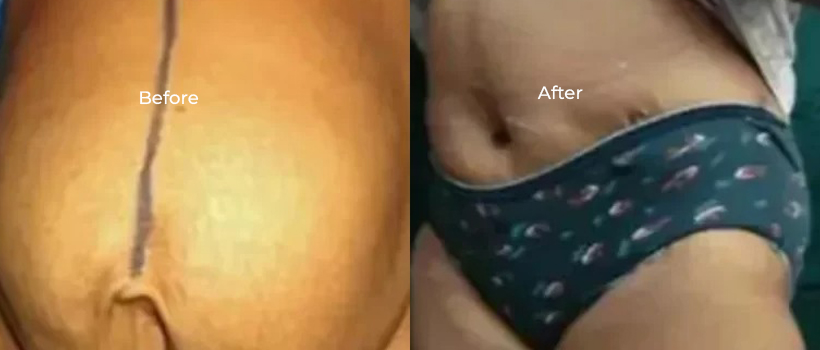
A tummy tuck, or abdominoplasty, removes excess loose skin and selected fat from the abdomen. The operation may also repair weakened or separated abdominal muscles to create a firmer abdominal profile.
It is commonly considered after pregnancy or substantial weight loss when stretched skin does not contract with exercise. It is major surgery and is not intended as a method of losing weight.
The consultation assesses skin distribution, abdominal muscles, scars, hernias, weight stability, future pregnancy plans and general health before an operation is recommended.
Clinical suitability
The operation is intended for abdominal skin and muscle concerns that cannot be corrected through exercise alone. It is not a weight-loss procedure.
Treatment planning
The incision, skin removal and muscle repair depend on where excess tissue sits and how far it extends.
Selected lower-abdominal concerns below the navel may be treated through a shorter incision.
Limited lower-abdominal correctionExcess skin is removed and the navel is repositioned; separated abdominal muscles may be repaired.
Addresses upper and lower abdomenA longer incision may be needed when loose skin extends toward the sides or follows major weight loss.
Wider body-contouring planThe surgical journey
The exact operation is confirmed after examination and discussion of scars, muscle repair and recovery.
A planned lower-abdominal incision is made under general anaesthesia.
Separated or weakened abdominal muscles are repaired when required.
Excess skin and selected fat are removed and the remaining skin is redraped.
Drains, dressings and a support garment may be used according to the operation.
Recovery planning
Abdominoplasty is major surgery. Early walking, wound care, compression and gradual return to activity are planned around the extent of surgery and individual healing.
Your surgeon will advise when it is safe to drive, work, lift, exercise and stop wearing the support garment.
Pain control, careful walking, dressings and drain care where used.
Swelling and tightness gradually settle; follow-up checks wound healing.
Many routine activities resume gradually after surgical review.
Swelling reduces and the lower-abdominal scar continues to mature.
Informed decision-making
Your surgeon will discuss risks based on your health, proposed operation and any combined procedures.
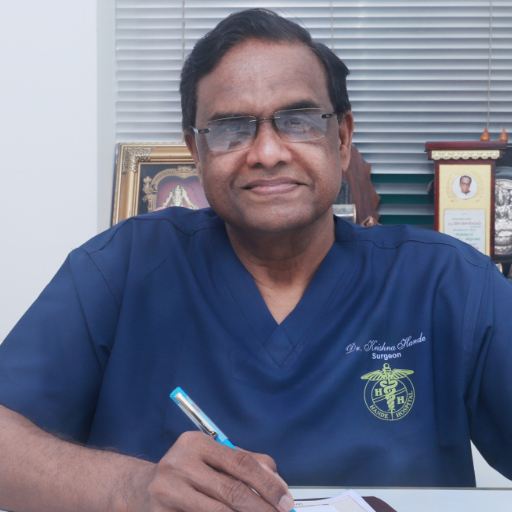
Your plastic surgeon
MS, FRCS (Edin), MCh (Plastic Surgery), FMMC
Dr. Krishna Hande is a General, Plastic and Cosmetic Surgeon at Hande Hospital and Hande Medical Centre. His listed areas of practice include abdominoplasty, liposuction, gynecomastia correction and hair transplantation.
Common questions
The appropriate operation and recovery plan depend on your abdominal skin, muscles, health and treatment goals.
It can remove excess abdominal skin and selected fat and may tighten separated abdominal muscles. The extent depends on examination and the selected operation.
No. Abdominoplasty is body-contouring surgery rather than a treatment for obesity. Patients are generally advised to reach a stable, healthy weight before surgery.
A mini procedure treats selected concerns below the navel. A full abdominoplasty treats a wider area, may repair muscles and usually repositions the navel.
The main scar is placed across the lower abdomen so it can usually sit beneath underwear. Its length depends on how much skin must be removed.
Separated rectus muscles may be brought together when clinically indicated. Examination determines whether muscle repair is suitable.
Drains and compression may be used depending on the operation and surgeon’s technique. You will receive specific care and removal instructions.
Timing depends on the operation, occupation and healing. Light activity begins early, while lifting and strenuous exercise remain restricted until surgical review.
A future pregnancy can stretch the repaired muscles and skin again. Patients planning pregnancy are often advised to postpone abdominoplasty.
Considering abdominal contouring?
Discuss loose skin, muscle separation, scars, recovery and which approach may be appropriate.