
Asthma is a long-term condition that affects the airways in your lungs, making it hard to breathe when something triggers it. The key to managing asthma well is knowing what sets it off—and avoiding or controlling those triggers. While asthma can’t be cured, you can live a normal, active life by keeping your triggers under control.
In this blog, let’s look at the most common asthma triggers and some simple steps you can take to stay safe and breathe easier.
Common Asthma Triggers
Asthma triggers can vary from person to person. Here are the most common ones:
1. Allergens
These are substances that cause allergic reactions, which can also trigger asthma symptoms.
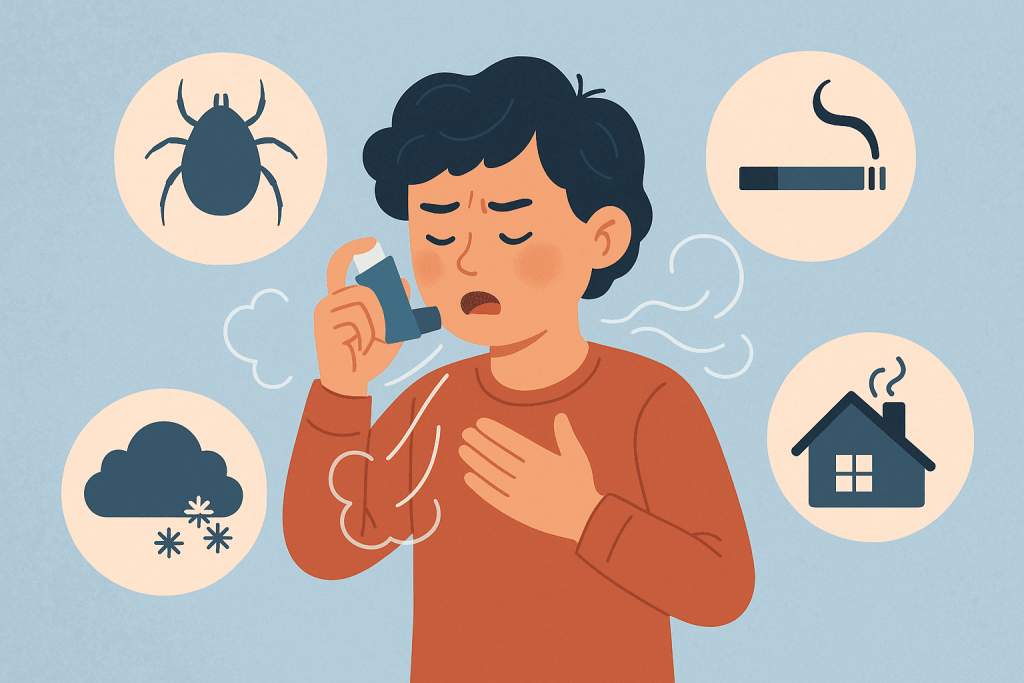
- Dust mites – tiny bugs found in bedding, mattresses, and furniture.
- Pollen – from trees, grass, and weeds, especially during certain seasons.
- Pet dander – tiny flakes of skin from animals like cats and dogs.
- Mould – can grow in damp areas like bathrooms or kitchens.
Prevention Tips:
- Wash bedding in hot water weekly.
- Use dust-mite-proof covers on pillows and mattresses.
- Keep pets out of bedrooms.
- Fix leaks and keep rooms dry to prevent mould.
2. Air Pollution & Smoke
Smoke from vehicles, factories, or burning waste, and even cigarette smoke, can worsen asthma symptoms.
Prevention Tips:
- Avoid going out during high pollution days.
- Do not allow smoking inside your home.
- Use air purifiers indoors to reduce pollution.
3. Weather Changes
Sudden changes in temperature or breathing in cold air can cause asthma symptoms.
Prevention Tips:
- Cover your nose and mouth with a scarf in cold weather.
- Stay indoors when there are sudden temperature changes or strong winds.
4. Exercise
Some people get asthma symptoms when they exercise, especially in cold or dry weather.
Prevention Tips:
- Warm up before exercising.
- Use an inhaler before activity if recommended by your doctor.
- Choose indoor activities when outdoor air is bad.
5. Stress and Emotions
Strong emotions like stress, laughter, or crying can tighten your chest and trigger asthma.
Prevention Tips:
- Practice deep breathing and relaxation techniques like yoga or meditation.
- Maintain a calm and balanced routine.
6. Infections
Colds, flu, or sinus infections can trigger asthma symptoms, especially in children.
Prevention Tips:
- Get regular vaccinations, like the flu shot.
- Wash hands regularly to prevent infections.
- Treat colds early and rest well.
7. Strong Odors and Chemicals
Perfumes, cleaning products, incense, or paints can irritate the lungs.
Prevention Tips:
- Use unscented products.
- Keep windows open for ventilation when cleaning or painting.
- Avoid heavily scented areas.
8. Hormonal Changes
Some women experience more asthma symptoms during their periods, pregnancy, or menopause due to hormonal shifts.
Prevention Tips:
- Track symptoms and discuss with your doctor if you notice a pattern.
- Make adjustments in asthma medications as advised by your healthcare provider.
Stay Prepared and Protected
- Always carry your inhaler.
- Create an asthma action plan with your doctor.
- Keep your home clean and allergen-free.
- Know your personal triggers and act early if symptoms begin.
Take Control of Your Breathing
Managing asthma starts with understanding what triggers it. Once you know your triggers, you can take simple steps to reduce your risk and keep your lungs healthy.
Book your appointment at Hande Hospital today by calling 98410 11390 for expert consultation and get on the path to better health.