

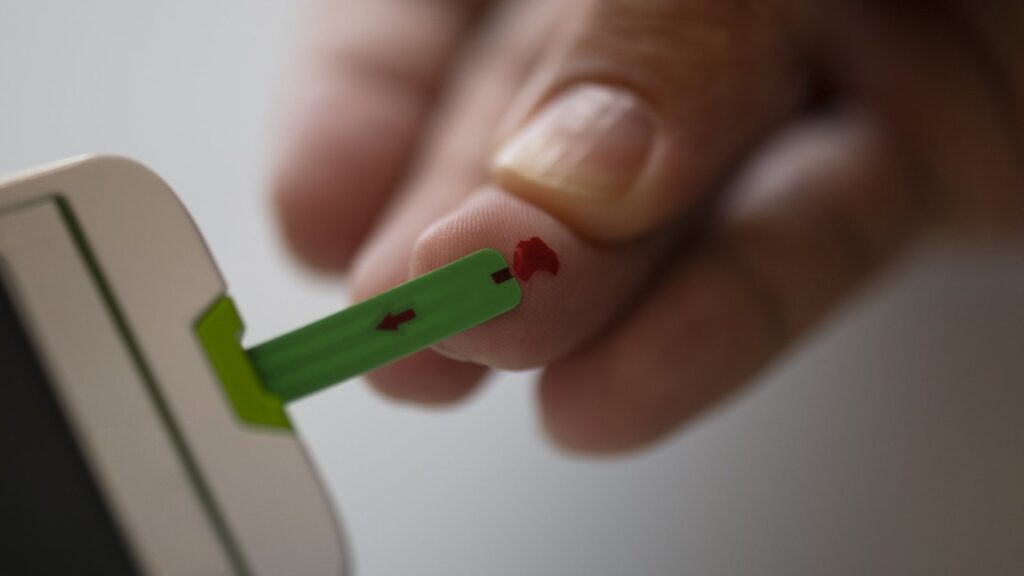
Ask someone with diabetes about their fasting sugar and they will usually tell you the number straight away. Ask when they last had their eyes, kidneys or feet checked, and the answer is often a long pause.
That gap matters. Diabetes rarely announces its complications. Damage to the eyes, kidneys, nerves and heart builds slowly and quietly, sometimes for years, before you feel anything. The good news is that most of it can be caught early, and often slowed or prevented, with a handful of regular tests. World Diabetes Day on 14 November is a good reason to book yours.
Why one sugar reading is not enough
A glucometer reading tells you about this moment. HbA1c tells you what your blood sugar has averaged over roughly the last three months, which is a much better guide to how well things are controlled. But neither shows you what is happening inside your kidneys or in the tiny blood vessels at the back of your eyes. For that you need the other check-ups.
The yearly check-up list
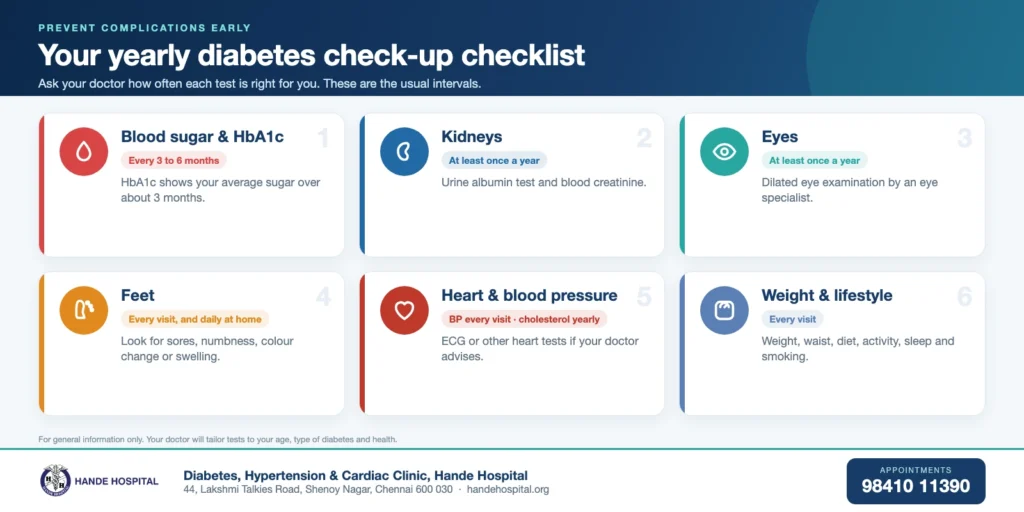
Your doctor will tailor this to your age, the type of diabetes and your overall health, but these are the usual tests:
- HbA1c: usually every three to six months. It shows your average sugar and whether your treatment needs adjusting.
- Kidney tests: a urine test for albumin and a blood test for creatinine, at least once a year. Early kidney damage often causes no symptoms at all.
- Eye examination: a dilated eye exam with an eye specialist at least once a year, because diabetic eye disease can progress before your vision changes.
- Foot examination: your doctor should check your feet at every visit, looking at skin, nails, pulses and sensation. At home, look at your own feet every day. Our post on foot care for people with diabetes has practical tips.
- Blood pressure and cholesterol: blood pressure at every visit and a lipid profile once a year, or more often if the numbers are off. Diabetes, high blood pressure and high cholesterol together raise heart risk considerably, as we explain in The Triple Threat.
- Heart check: an ECG and, if you have symptoms or other risk factors, tests such as an echocardiogram or treadmill test, as your doctor advises.
- Weight, waist and lifestyle: a quick check at each visit, along with a conversation about diet, activity, sleep and smoking.
Depending on your situation, your doctor may also add liver and thyroid tests, vitamin B12 (if you have been on metformin for years), a dental check and vaccinations such as flu and pneumococcal.
Signs that should not wait for the yearly visit
- Blurred vision, floaters or any sudden change in sight
- A cut, blister or sore on the foot that is slow to heal, or a foot that changes colour
- Numbness, tingling or burning in the feet or hands
- Swelling of the feet or face, or foamy urine
- Chest pain or pressure, breathlessness, or pain spreading to the arm or jaw (this is an emergency)
- Repeated infections, extreme thirst or passing urine very often
- Episodes of shakiness, sweating or confusion that suggest low blood sugar
Everyday habits that protect you
- Take your medicines as prescribed, even when you feel fine
- Walk for about 30 minutes most days, if your doctor says it is safe for you
- Build meals around vegetables, dals, whole grains and protein, and go easy on sweets and refined food
- Do not smoke
- Check your feet daily and avoid walking barefoot
- Keep a simple diary of your readings and bring it to your visits
Making your yearly check-up easier
Keep all your reports in one folder, or as photos on your phone, so your doctor can see how things are trending. Write down your questions beforehand and carry your full medicine list. If you are having blood tests, ask whether you need to fast and book a morning slot. Getting the tests done together in one visit saves time and makes it much more likely that you will actually do them. Our health check-up packages are one way to do that.
Frequently Asked Questions
1. How often should HbA1c be checked?
Usually every three months if your sugar is not well controlled or your treatment has recently changed, and every six months once things are stable. Your doctor will tell you what suits you.
2. I feel fine. Do I still need all these tests?
Yes. Feeling fine is exactly when these tests are most useful, because early damage to the eyes, kidneys and nerves usually causes no symptoms.
3. Are these tests only for people on insulin?
No. They are recommended for everyone with diabetes, whether it is managed with diet, tablets or insulin.
Plan your check-up with us
If you have lost track of when you last had these tests, now is a good time to catch up. Our Diabetes, Hypertension & Cardiac Clinic can plan your yearly review with you, and tests such as laboratory investigations, ECG, echocardiogram and treadmill test are available at the hospital. See our 24-hour diagnostic laboratory and our ECG, treadmill and echocardiogram services for details.
- Location: Hande Hospital, 44, Lakshmi Talkies Road, Shenoy Nagar, Chennai 600 030
- Appointments: Call 98410 11390
This article is for general information and does not replace a medical consultation. Please follow the advice of your own doctor.