

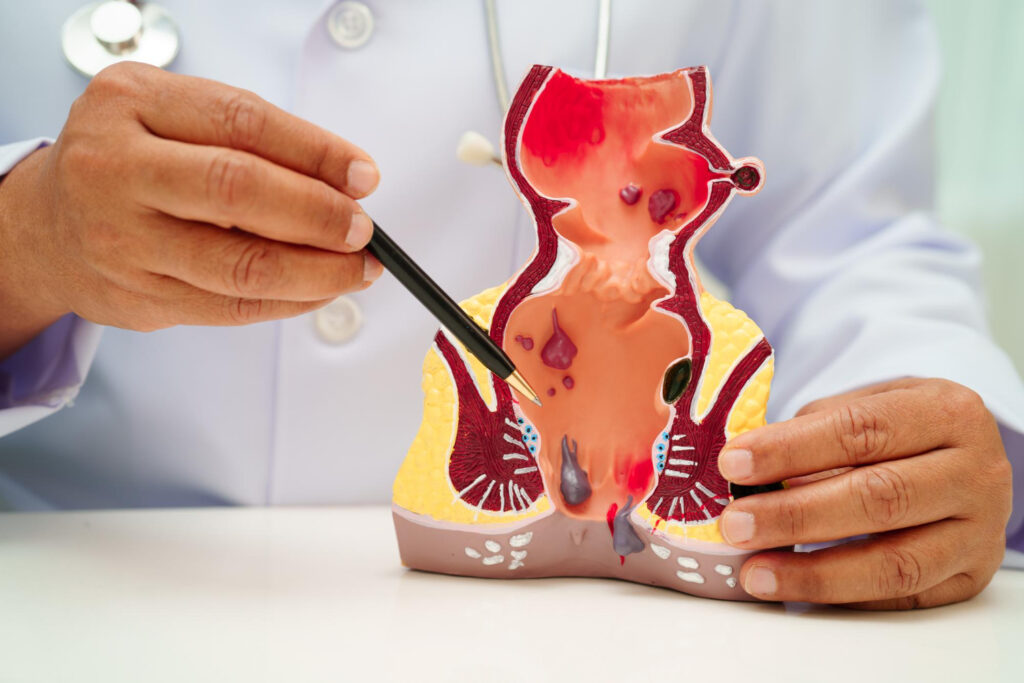
Pain, bleeding, itching, or discomfort around the anus can be worrying, especially when it is difficult to understand what is causing the problem. Two of the most common conditions responsible for these symptoms are anal fissures and piles (haemorrhoids).
Although they may produce similar symptoms, anal fissures and piles are different conditions and may require different approaches to treatment. Understanding the difference can help you recognise the symptoms and seek appropriate medical care at the right time.
What Is an Anal Fissure?
An anal fissure is a small tear or crack in the lining of the anus. It commonly develops when hard or large stools stretch the anal opening during bowel movements.
Constipation and excessive straining are among the most common contributing factors.
Common Symptoms of Anal Fissure
Symptoms may include:
- Sharp or severe pain while passing stools
- Burning pain that may continue after a bowel movement
- Bright red blood on toilet paper or on the surface of the stool
- A visible small tear around the anus
- Spasm or tightness around the anal opening
- Fear or discomfort associated with bowel movements
Pain is usually one of the most noticeable symptoms of an anal fissure.
What Are Piles?
Piles, also called haemorrhoids, are swollen and enlarged blood vessels in or around the anus and lower rectum.
They may be classified as:
- Internal piles: Develop inside the rectum
- External piles: Develop underneath the skin around the anus
Piles may result from increased pressure on the veins around the rectum, often associated with constipation, prolonged straining, pregnancy, obesity, or sitting for long periods.
Common Symptoms of Piles
Symptoms can vary depending on the type and severity of haemorrhoids but may include:
- Bright red bleeding during bowel movements
- Itching or irritation around the anus
- Swelling around the anal area
- A lump near the anus
- Mucus discharge
- Discomfort while sitting or passing stools
- Pain, particularly if an external haemorrhoid develops a blood clot
Internal piles may sometimes cause bleeding without significant pain.
Anal Fissure vs Piles: What Is the Difference?
| Feature | Anal Fissure | Piles |
| What is it? | A tear in the anal lining | Swollen blood vessels around or inside the anus |
| Pain | Often sharp and severe during or after stools | May be mild or absent in internal piles; external piles can be painful |
| Bleeding | Usually small amounts of bright red blood | Bright red bleeding may occur during bowel movements |
| Lump or swelling | Usually absent | May be present, especially with external piles |
| Itching | Less common | Common |
| Common cause | Hard stools, constipation or trauma | Straining, constipation and increased pressure on rectal veins |
Because symptoms can overlap, it is not always possible to determine the condition based on symptoms alone.
What Causes Anal Fissures?
Common causes and contributing factors include:
- Chronic constipation
- Passing hard or large stools
- Repeated diarrhoea
- Straining during bowel movements
- Childbirth
- Trauma to the anal canal
Certain inflammatory conditions may also occasionally contribute to recurring fissures.
What Causes Piles?
Factors that may increase the likelihood of developing haemorrhoids include:
- Chronic constipation
- Excessive straining during bowel movements
- Sitting on the toilet for long periods
- Low-fibre diet
- Pregnancy
- Obesity
- Heavy lifting
- Age-related weakening of supporting tissues
Can Both Conditions Cause Rectal Bleeding?
Yes. Both anal fissures and piles can cause bright red rectal bleeding.
However, rectal bleeding should not automatically be assumed to be caused by piles or fissures. Other gastrointestinal conditions can also lead to bleeding.
Persistent, recurrent, unexplained or heavy rectal bleeding should therefore be evaluated by a doctor.
How Are Anal Fissures Diagnosed?
A doctor will usually evaluate your symptoms and perform a physical examination.
In some cases, additional tests may be advised depending on your symptoms, medical history, age or the presence of recurrent bleeding.
Proper diagnosis is important because several anorectal conditions can produce similar symptoms.
How Are Piles Diagnosed?
Diagnosis may involve examination of the anal and rectal area. Depending on the symptoms, doctors may perform procedures such as anoscopy or other investigations to examine the lower rectum.
Further tests may sometimes be recommended to rule out other possible causes of bleeding.
Treatment for Anal Fissure
Many acute fissures can improve with conservative measures aimed at making bowel movements softer and reducing strain.
Treatment may include:
- Increasing dietary fibre
- Drinking adequate fluids
- Avoiding excessive straining
- Stool-softening medication when prescribed
- Warm sitz baths
- Medicines to relax the anal muscles when recommended
Persistent or chronic fissures that do not respond to conservative treatment may require additional medical or surgical management.
Treatment for Piles
Treatment depends on the severity and type of haemorrhoids.
Initial management may include:
- Increasing fibre intake
- Maintaining good hydration
- Avoiding prolonged straining
- Regular physical activity
- Medicines for symptom relief when prescribed
For persistent or advanced haemorrhoids, a specialist may recommend procedures or surgical treatment depending on the individual case.
When Should You Consult a Doctor?
Consider seeking medical evaluation if you experience:
- Repeated rectal bleeding
- Severe or persistent anal pain
- A painful or enlarging lump around the anus
- Symptoms that do not improve
- Changes in bowel habits
- Unexplained weight loss
- Dark or black stools
- Heavy bleeding, dizziness or weakness
An accurate diagnosis can help determine whether your symptoms are caused by piles, an anal fissure or another digestive condition.
Can Anal Fissures and Piles Be Prevented?
While not every case is preventable, maintaining healthy bowel habits may reduce the risk of developing both conditions.
Helpful measures include:
- Eating fibre-rich foods such as fruits, vegetables and whole grains
- Drinking sufficient water
- Staying physically active
- Avoiding excessive straining
- Responding to the urge to pass stools instead of delaying it
- Avoiding prolonged sitting on the toilet
- Seeking medical advice for persistent constipation
Conclusion
Anal fissures and piles can both cause bleeding and discomfort around the anus, but they are different conditions. An anal fissure is a tear in the anal lining and commonly causes sharp pain during bowel movements, while piles are swollen blood vessels that may cause bleeding, itching, swelling or a lump around the anus.
Because their symptoms can overlap, self-diagnosis may not always be reliable. Persistent pain, bleeding or recurring symptoms should be assessed by a qualified medical professional so that the underlying problem can be identified and appropriately treated.
For consultation regarding piles, anal fissures and other gastrointestinal or surgical conditions, you may consult:
Dr. P. Senthil Kumar
MS., MCh (Gastro)
Surgical Gastroenterologist
at Hande Hospital, Chennai.
📞 To know more about these health check-up packages or to book an appointment, kindly call 9841011390 or write to handehospital@yahoo.com.
Timely consultation and preventive care at Hande Hospital help provide expert diagnosis, appropriate investigations and compassionate treatment — all under one roof.
This article is intended for general health information and should not replace consultation with a qualified healthcare professional.