
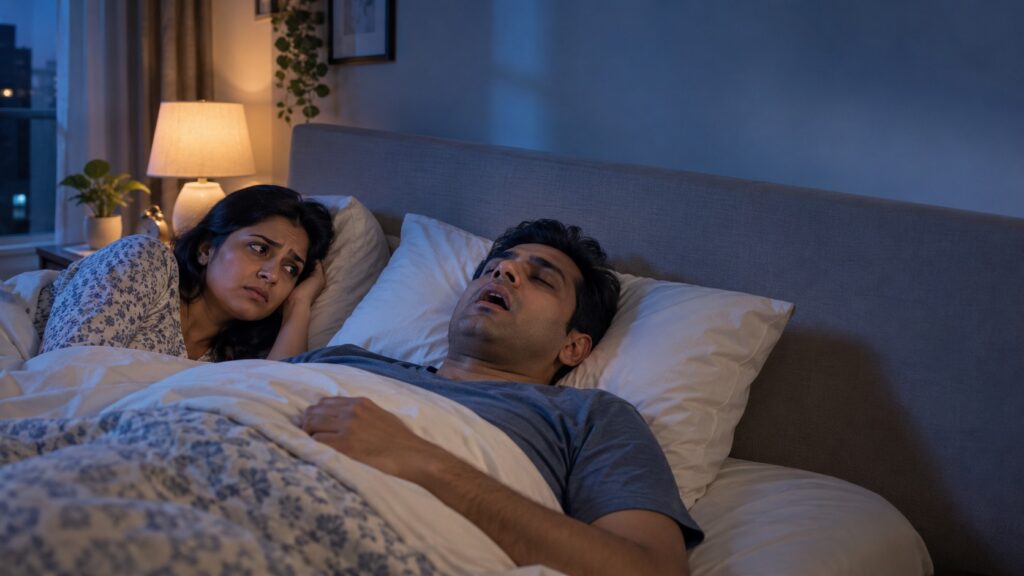
Snoring is common and may occasionally occur because of nasal congestion, tiredness or an awkward sleeping position. However, loud and persistent snoring—especially when accompanied by pauses in breathing—could be a warning sign of sleep apnea.
Sleep apnea is a condition in which breathing repeatedly stops and restarts during sleep. These interruptions can lower oxygen levels and prevent the body from getting deep, restorative sleep. A person may not realise this is happening, making observations from a spouse or family member particularly important.
What Is Sleep Apnea?
Sleep apnea causes repeated interruptions in breathing while a person sleeps. These interruptions may last for several seconds and occur many times throughout the night.
The main types include:
Obstructive Sleep Apnea
Obstructive sleep apnea, or OSA, is the most common type. It occurs when the muscles and soft tissues at the back of the throat relax and temporarily block the airway.
Central Sleep Apnea
This less common form occurs when the brain does not consistently send the correct signals to the muscles responsible for breathing.
Complex Sleep Apnea
Also called treatment-emergent central sleep apnea, this condition involves features of both obstructive and central sleep apnea.
Is Loud Snoring Always a Sign of Sleep Apnea?
No. Not everyone who snores has sleep apnea. Snoring can occur when air passes through relaxed tissues in a narrowed airway, causing them to vibrate.
However, snoring deserves medical attention when it is:
- Loud and frequent
- Interrupted by periods of silence
- Followed by gasping, choking or snorting
- Associated with restless sleep
- Accompanied by morning headaches
- Followed by excessive tiredness during the day
Loud snoring combined with breathing that stops and restarts is a recognised sign of obstructive sleep apnea and should be medically evaluated.
Common Symptoms of Sleep Apnea
Many symptoms occur during sleep and may be noticed first by another person.
Symptoms During Sleep
- Loud, ongoing snoring
- Repeated pauses in breathing
- Gasping, choking or snorting
- Restless or disturbed sleep
- Waking up frequently
- Waking with a dry mouth
- Frequent nighttime urination
Symptoms During the Day
- Excessive daytime sleepiness
- Morning headaches
- Difficulty concentrating
- Poor memory
- Irritability or mood changes
- Reduced performance at work or school
- Falling asleep while reading, watching television or travelling
Children with sleep apnea may show different signs, including mouth breathing, behavioural changes, bed-wetting, learning difficulties or poor attention.
What Causes Obstructive Sleep Apnea?
Obstructive sleep apnea develops when the upper airway repeatedly becomes narrow or blocked during sleep. Several factors can increase the likelihood of this happening:
- Being overweight or obese
- Having a naturally narrow airway
- Enlarged tonsils or adenoids
- Nasal obstruction or persistent congestion
- A large tongue or certain jaw structures
- Increasing age
- Family history of sleep apnea
- Smoking
- Alcohol consumption, particularly before bedtime
- Use of sedatives or sleeping medicines
- Sleeping on the back
People who are not overweight can also develop sleep apnea. Therefore, symptoms should not be ignored based only on body weight or appearance.
When nasal blockage, enlarged tonsils, swollen adenoids or another upper-airway problem is suspected, an assessment at an ENT clinic may help identify the cause.
Why Should Sleep Apnea Not Be Ignored?
Untreated sleep apnea repeatedly disturbs sleep and reduces the amount of oxygen reaching the body. Over time, this may affect physical health, emotional well-being and daily functioning.
Sleep apnea may be associated with:
- High blood pressure
- Increased strain on the heart
- Irregular heart rhythms
- Greater risk of heart disease and stroke
- Difficulty controlling blood sugar
- Poor concentration and memory
- Depression or mood changes
- Reduced work performance
- Increased risk of road or workplace accidents
Severe daytime sleepiness can be particularly dangerous when driving or operating machinery. Anyone who frequently feels sleepy while driving should avoid driving and seek medical attention promptly.
When Should You Consult a Doctor?
Consider a medical evaluation if you or a family member notices:
- Loud snoring on most nights
- Breathing pauses during sleep
- Gasping or choking while asleep
- Waking repeatedly without a clear reason
- Persistent morning headaches
- Excessive sleepiness despite sleeping for enough hours
- Difficulty concentrating during the day
- Unexplained irritability or mood changes
- High blood pressure that is difficult to control
You should also consult a doctor if snoring has recently become louder or is affecting your sleep and daily activities.
How Is Sleep Apnea Diagnosed?
Diagnosis begins with a discussion about sleep patterns, snoring, medical history and daytime symptoms. A doctor may examine the nose, mouth, throat and neck to identify possible airway obstruction.
A sleep study may then be recommended. This can be conducted overnight at a sleep centre or, in selected cases, using a home-based sleep test.
The study may record:
- Breathing patterns
- Oxygen levels
- Heart rate
- Airflow
- Chest and abdominal movement
- Brain activity and sleep stages
- Number of breathing interruptions
The Apnea–Hypopnea Index, or AHI, indicates how frequently breathing stops or becomes significantly reduced during each hour of sleep. The results help the doctor assess whether sleep apnea is mild, moderate or severe.
Patients experiencing sleep-related breathing problems may also require evaluation by a pulmonologist. Learn more about the Pulmonary and Asthma Clinic at Hande Hospital.
How Is Sleep Apnea Treated?
Treatment depends on the type and severity of sleep apnea, the underlying cause and the patient’s overall health.
Lifestyle Changes
For mild cases, a doctor may recommend:
- Gradual weight reduction when appropriate
- Regular physical activity
- Avoiding alcohol close to bedtime
- Stopping smoking
- Sleeping on the side instead of the back
- Maintaining regular sleeping hours
- Avoiding sedative medicines unless prescribed
Lifestyle measures can help, but they should not replace prescribed treatment in moderate or severe cases.
CPAP Therapy
Continuous Positive Airway Pressure, commonly called CPAP, uses a bedside machine and mask to provide a gentle flow of air. This pressure helps keep the airway open during sleep.
Consistent use may improve breathing and sleep quality while reducing daytime tiredness. CPAP is one of the commonly used treatments for sleep apnea.
Oral Appliances
A specially fitted mandibular advancement device may be recommended for selected patients with mild or moderate obstructive sleep apnea. It moves the lower jaw and tongue slightly forward to help keep the airway open.
These appliances should be selected and fitted under professional guidance.
Treatment for Nasal or Throat Obstruction
Medication or another form of treatment may be required when allergies, chronic nasal congestion or an upper-airway problem contributes to the symptoms.
An ENT evaluation can help identify conditions such as nasal obstruction, enlarged tonsils, swollen adenoids or other structural problems that may affect breathing during sleep.
Surgery
Surgery may be considered when enlarged tonsils, adenoids or another structural obstruction is responsible for sleep apnea, or when other treatments have not been effective.
The recommended procedure depends on the location and cause of the airway obstruction. Surgery is not required for every patient, and the decision should be based on a specialist evaluation.
Can Snoring Be Managed Without Medical Advice?
Simple steps such as sleeping on the side, avoiding alcohol before bedtime and managing nasal congestion may reduce occasional snoring. However, these measures should not delay medical evaluation when breathing pauses, gasping or excessive daytime sleepiness are present.
Anti-snoring products may not treat the underlying airway obstruction. A treatment that reduces the sound of snoring does not necessarily correct sleep apnea.
Do Not Dismiss Persistent Snoring
Loud snoring may be more than a nighttime disturbance. When it occurs with interrupted breathing, choking sounds, morning headaches or daytime sleepiness, it could indicate sleep apnea.
Timely diagnosis can help identify the cause and determine whether lifestyle measures, CPAP, an oral appliance, treatment for airway obstruction or another approach may be appropriate.
For an evaluation of persistent snoring, breathing difficulty during sleep or related respiratory and ENT symptoms, consult the appropriate specialist at Hande Hospital.
Hande Hospital
44, Lakshmi Talkies Road, Shenoy Nagar, Chennai – 600 030
Phone: +91 98410 11390
Hande Medical Centre
65, Nungambakkam, Chennai – 600 034
Phone: +91 99625 22667
Email: handehospital@yahoo.com
Website: www.handehospital.org
Contact: Book an appointment or contact Hande Hospital
This blog is intended for general awareness and should not replace consultation with a qualified medical professional.